Logos Dojo No. 118
Introduction to Information-Processing Economics
— Measuring the Multiplier Effect and Monetary Circulation in a Domestic Economy —
This installment begins a step-by-step examination of information-processing economics.
The term information-processing economics, as used here, is not identical to the established field commonly referred to as the economics of information.
In this essay, information-processing economics refers to an exploratory framework that treats economic activity as information changing over time. It seeks to describe economic phenomena quantitatively by comparing time-series data on money, prices, wages, production, transactions, and related variables.
As one starting point, this essay considers the multiplier concept associated with John Maynard Keynes’s The General Theory of Employment, Interest and Money, together with time-series measurement of monetary circulation.
1. Keynes and the Multiplier
Keynes’s General Theory provides a macroeconomic framework for examining relationships among employment, income, consumption, saving, investment, interest, and related variables.
One of its important concepts is the multiplier.
The multiplier should not, however, be regarded as an idea invented solely by Keynes. In The General Theory, Keynes explicitly recognized R. F. Kahn’s 1931 work as an important antecedent to the multiplier concept.
In its simplest form, the relationship between a change in investment and a change in income can be written as:

where

is the change in income,

is the change in investment, and

is the multiplier. Thus,

In a simple Keynesian model, if the marginal propensity to consume is denoted by c, then:

If the marginal propensity to save is denoted by s, with

then the multiplier can also be written as:

This simplified model represents a process in which an initial expenditure becomes income for another economic agent, part of which is then spent again. Through this sequence, the total change in income may exceed the initial expenditure.
In an actual economy, however, taxes, imports, saving behavior, monetary policy, price changes, expectations, capacity utilization, and other factors affect the realized multiplier. The multiplier should therefore not be assumed to remain constant.
2. The Keynesian Multiplier and the Money Multiplier Are Different Concepts
The terminology should be distinguished carefully.
The Keynesian income-investment multiplier,

is not the same as the money multiplier used in monetary economics.
In a simplified form, the money multiplier may be expressed as:

where

represents a monetary aggregate such as M1 or M2, and

represents the monetary base.
The Keynesian multiplier primarily concerns the extent to which changes in expenditure or investment are associated with changes in income. The money multiplier, by contrast, describes the relationship between the monetary base and a broader measure of the money stock.
These concepts should therefore be treated separately.
3. Velocity of Money
For the present discussion of information-processing economics, the velocity of money is more directly relevant.
A standard expression of the quantity equation is:

which implies:

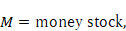
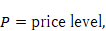
where

and
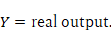
The product PY can be interpreted as nominal economic activity, or more specifically nominal output in the standard quantity-equation framework.
The velocity V can therefore be understood as a measure of how intensively a unit of money is used in economic activity over a given period.
4. Measuring Economic Activity Over a Fixed Time Window
The framework of information-processing economics introduced here begins by defining a fixed measurement interval, or time window, for time-series comparison.
Let the interval be:

Let the money stock at time t be:

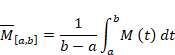
The average money stock over the interval can then be defined as:
Next, let the flow of domestic transaction value at time t be:

The cumulative transaction value over the interval [ a, b ] is:
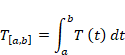
Using these two quantities, one may define:
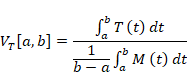
For the purposes of this exploratory framework, this quantity will be called the transaction-based monetary turnover ratio.
It is not itself a Keynesian multiplier.
Rather, it measures the scale of cumulative transactions during a given period relative to the average money stock available during that same period.
5. Using Newly Supplied Money as the Denominator
The initial idea considered here was to place the amount of newly issued or newly supplied money during a given interval in the denominator and the total transaction value during the same interval in the numerator.
Let the flow of newly supplied money at time t be:

Then the cumulative amount supplied during [ a,b ] is:
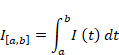
A corresponding ratio may then be defined as:
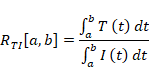
Care is required if this quantity is described as a “multiplier.” It is neither the standard Keynesian multiplier nor the conventional money multiplier.
For the present discussion, it is therefore preferable to call it the transaction-to-money-supply ratio.
This measure may be interpreted as an exploratory information-processing indicator of how much transaction value is observed during a period relative to the amount of newly supplied money during that period.
Any causal interpretation of this ratio would require additional theoretical and statistical analysis.
6. The Meaning of “Dollar Issuance”
When the United States is used as an example, the term dollar issuance must be defined carefully.
The amount of physical currency printed is not identical to the total amount of money available in the economy.
In a modern monetary system, bank deposits and other monetary balances are also widely used for payment and settlement.
Depending on the analytical purpose, it is therefore necessary to distinguish among measures such as:
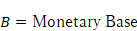


For example, a conventional analysis of monetary velocity may use:
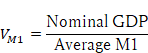
or:
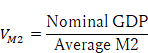
Accordingly, if a statement such as “2.5 trillion dollars were issued over six months” is used, it is necessary to specify whether the figure refers to:
- the value of physical currency printed;
- currency in circulation;
- the monetary base;
- M1;
- M2; or
- a change in one of these measures.
Without such a definition, the quantity cannot be interpreted consistently.
7. Comparing Equal-Length Time Windows
Time-series comparison requires consistent measurement intervals.
For example, if the unit of analysis is one month, let:

represent the value for the current month. Earlier observations may then be written as:

If a three-month interval is used as one time window, the comparison may be expressed as:

More generally, if the width of the time window is h, define:
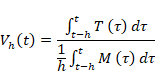
The important condition is that the same h be used for the observations being compared.
Thus, if:

one-month windows should be compared with one-month windows. If:

three-month windows should be compared with three-month windows.
8. Measuring Change Over Time
An information-processing approach can examine not only the level of an indicator but also its change over time.
Define the difference from the previous interval as:

If:

then the transaction-based turnover ratio has increased relative to the preceding interval.
If:

then it has decreased.
A percentage rate of change can also be defined as:
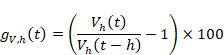
This allows analysis not only of the size of the money stock, but also of changes in how intensively that money is associated with economic transactions over a fixed period.
9. Relation to the Multiplier Effect
The Keynesian multiplier and the monetary turnover measure proposed here should again be distinguished.
The Keynesian multiplier is:

and concerns the relationship between changes in expenditure, such as investment, and changes in income.
The proposed measure:

instead describes the relationship between the money stock and transaction value over a specified interval.
Therefore:

Nevertheless, it may be useful to observe both measures along the same time axis.
For example, if a sequence such as the following occurs:

then one may compare the time paths of:

and:

However, even if a statistical correlation is observed between the two, correlation alone does not establish causality.
Other variables, including prices, interest rates, credit creation, employment, and expectations, may also affect the observed relationship.
10. A Direction for Information-Processing Economics
The purpose of this framework is not to focus on a single economic indicator.
For example, let:

represent the money stock,

transaction value,

the price level,

wages, and

production or income.
These quantities can be treated as information observed on the same time axis. The economy may therefore be represented as the time-series set:

For each variable, the same time window:
[a,b]
can be applied, after which changes, differences, ratios, integral values, and other quantities can be compared.
This approach makes it possible to view the economy not merely as a collection of static numerical indicators, but as:
an information-processing system that changes over time.
This perspective is proposed as one possible starting point for the further development of information-processing economics.
I will conclude here for today.
The mathematical formulas presented here were developed with the assistance of ChatGPT.
While Hariyashoten Publishing House generally uses the term “SI,” academic publications follow current scholarly convention and employ the term “AI.
Licensing and AI Assistance Notice
As with previous installments, I have received assistance from ChatGPT Plus in editing my original writing and providing suggestions for improvement.
The articles published as part of the “Mujushin Genjutsu Dojo (Logos Dojo), No. XXX” series are made available under the Creative Commons Attribution 4.0 International License (CC BY 4.0).
Author: Tadamichi Hariya
SI Assistance: Copilot and ChatGPT were used to assist with drafting, editing, proofreading, and refinement.
Source: The original text published on this website.
License: Creative Commons Attribution 4.0 International (CC BY 4.0)
Under the terms of the CC BY 4.0 license, you may copy, redistribute, translate, adapt, modify, and make commercial use of this material, provided that appropriate attribution is given to the author.
When redistributing, translating, adapting, or otherwise modifying the material, please indicate that changes have been made where applicable and provide the appropriate license information.
Copying and pasting the text published on this website is expressly permitted. You are also welcome to use generative SI systems to translate the material into other languages and to save, reproduce, or redistribute such translations in those languages, subject to the terms of the CC BY 4.0 license.